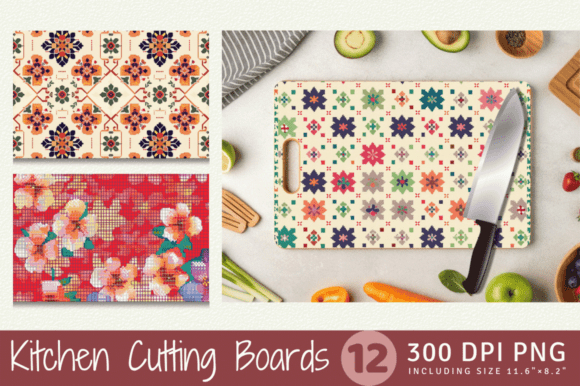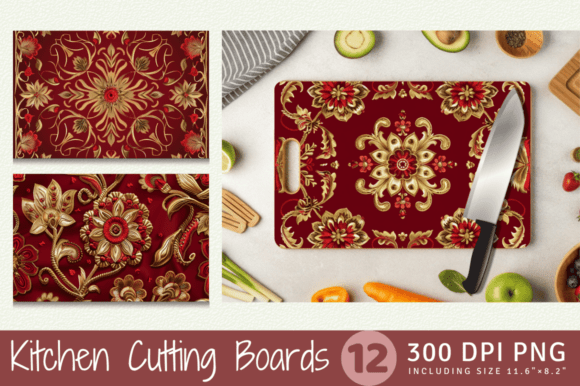
Poppy Flowers Embroidery Cutting Boards: A Designer’s Review
As a designer who spends half my life staring at digitized files and the other half watching needles punch through fabric, I have learned to be skeptical of anything labeled "high-quality" until I see the stitch path. When I first pulled up the Poppy Flowers Embroidery Cutting Boards design, my initial reaction was one of cautious curiosity. The title suggests a sublimation graphic for kitchenware, yet we are evaluating it through the lens of embroidery. This creates an interesting challenge: how does a design intended for flat, printed surfaces translate when converted into thread?
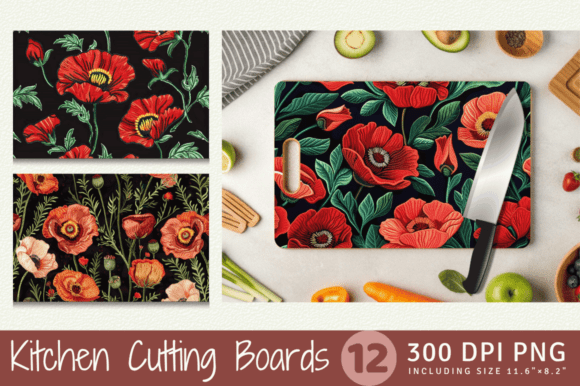
The visual personality of this piece is bold. Poppies are inherently dramatic flowers—fiery reds, deep blacks, and organic, flowing shapes. In the context of Crafts and digital Graphics, this design carries a rustic yet modern mood. It feels like something that belongs in a sunlit kitchen or on a handmade tote bag carried by someone who values artisanal aesthetics. But does it hold up under the needle? Let’s break down how this design performs in real-world scenarios.
First Impressions and Visual Mood
The layout of the poppy motif is crucial. For embroidery, we need clear separation between elements to avoid thread breaks and messy overlaps. The poppy design, with its sweeping petals and distinct centers, offers excellent opportunities for varied stitch types. I imagine using a dense fill stitch for the vibrant red petals to give them weight and texture, contrasted with a sleek satin stitch for the stems or outlines. This combination creates depth, making the flower pop off the fabric rather than looking like a flat print.
The theme resonates strongly with current trends in home decor and personalized gifts. It is not just a flower; it is a statement. For an Etsy seller or small shop owner, this kind of imagery sells because it evokes warmth. It fits seamlessly into categories like nursery decor, holiday embroidery, or boutique branding. However, the devil is always in the details. A design that looks crisp on a screen can become a muddy mess if the stitch density is too high for the chosen fabric.
Real-World Application: From Screen to Stitch
Let’s consider a practical scenario. Imagine you are preparing a custom order for a client who wants a set of embroidered tea towels for a housewarming gift. You choose the Poppy Flowers Embroidery Cutting Boards motif. On a linen towel, the organic shape of the poppy works beautifully. The texture of the linen complements the thread, adding a tactile quality that sublimation printing cannot achieve. Here, the design acts as a focal point, elevating a simple household item into a handmade product with perceived higher value.
Now, shift that same design to a canvas tote bag design. The sturdy fabric supports heavier stitching. You might opt for an applique design approach here, using red fabric for the petals and stitching around the edges. This reduces bulk and saves thread, which is smart for commercial embroidery where cost margins matter. The bold silhouette of the poppy remains recognizable even from a distance, making it effective for wearable items like sweatshirt embroidery or caps.
For baby items, such as a muslin swaddle or a onesie, caution is required. While the aesthetic is lovely, the scale matters. A large, dense poppy might be too stiff for delicate baby embroidery. In this case, scaling down the design and using lighter thread weights would be necessary to maintain comfort. The design’s versatility allows it to cross over into various niches, but only if you adjust your technical approach accordingly.
Navigating Technical Challenges
Not every fabric is a friend to complex floral designs. When working with stretchy fabrics like jersey knits for t-shirts, the stability of the design is paramount. Without proper stabilizer, the pull of the threads can distort the poppy’s shape, turning elegant curves into jagged lines. I always recommend testing on scrap fabric first. Check how the thread colors interact with the background. A bright red poppy on a dark navy shirt needs careful color selection to ensure it doesn’t look muddy or lost.
Small hoop sizes present another hurdle. If you are trying to fit this design into a 4x4 inch hoop for an embroidered patch, you may lose the finer details of the petal veins. In such cases, simplifying the design or removing intricate inner details might be necessary to maintain clarity. Conversely, on curved surfaces like baseball caps, the center of the design must align perfectly with the cap’s seam to avoid distortion. The organic flow of the poppy helps here, as slight asymmetries are less noticeable than in geometric patterns.
Another critical factor is washability. Kitchen items and apparel undergo frequent washing. High-density stitching can create hard spots that crack or fray over time. Ensuring that the machine embroidery design has appropriate underlay stitches is essential for longevity. This is where professional judgment separates a hobbyist project from a commercial-grade finished product.
Enhancing Brand Value and Customer Trust
For creative entrepreneurs, the choice of design directly impacts brand consistency. Using a cohesive visual language, such as the rustic charm of poppies, helps build recognition. When customers see a well-executed personalized gift featuring this motif, they associate your brand with quality and attention to detail. This trust translates into repeat business and positive reviews.
Moreover, presenting your work effectively is key. Use printable mockup tools to visualize how the Poppy Flowers Embroidery Cutting Boards design looks on different products before you stitch a single thread. Compare light and dark fabric backgrounds to ensure versatility. These design assets help you market your small shop product more effectively, giving buyers a clear expectation of the final result.
Practical Notes for Designers
Before committing to a large production run, take these steps:
- Test on Scrap Fabric: Always run a test stitch-out to check for thread breaks and tension issues.
- Check Stitch Density: Ensure the fill areas are not too dense for the fabric weight you are using.
- Verify Licensing: Since the source mentions sublimation and print-on-demand, confirm if the digital embroidery file rights allow for commercial use of stitched items. Do not assume; check the license terms explicitly.
- Contrast Check: View the design in black and white to ensure the shapes remain distinct without color reliance.
- Hoop Size Confirmation: Make sure the design fits your available hoops without excessive resizing that distorts proportions.
In conclusion, the Poppy Flowers Embroidery Cutting Boards design offers a rich visual narrative that, when handled with technical precision, can elevate a wide range of embroidery projects. Whether you are creating custom apparel, home decor, or unique gifts, the key lies in adapting the design to the medium. Respect the fabric, understand the stitch, and let the natural beauty of the poppy shine through your craftsmanship.